
A FIELD GUIDE TO BOTONY
Robotic weeding with BOTONY
BOTONY is Greenfield Robotics’ autonomous agricultural robot. It mechanically mows weeds between crop rows. This guide explains the work it does, the published crop requirements, and what to discuss when considering robots for your farm.
What the robot does
BOTONY’s weed-control task is mechanical mowing between planted crop rows. It cuts weeds while following the field’s planned routes. Greenfield’s goal is to give farmers another way to manage weeds and reduce reliance on herbicides.
Start by thinking about the job in your own field: the crop you grow, how it is planted, and when weed pressure develops. Those details help frame a useful conversation about whether robotic mowing belongs in your weed-management plan.
How a field becomes a robot route
BOTONY follows mapped field routes. Operator software supports remote monitoring and robot camera views.
In its 2026 field report, UVM Extension describes preparing routes from a drone survey and starting robots with their maps already loaded. Mapping, field preparation, and monitoring are part of the operating workflow. The Farmers page shows the robot in action and the operator interface.
Discuss field boundaries, turns, obstacles, connectivity, and the people responsible for monitoring before selecting a setup. The right operating plan starts with the farm’s actual conditions.
Which crops and row layouts fit?
Greenfield’s published guidance identifies the crops and field systems below. Use it as a starting point for a farm-specific discussion, rather than a promise that every field of a listed crop will suit the same setup.
| Topic | Guidance |
|---|---|
| Robot | BOTONY autonomous agricultural robot |
| Weeding method | Mechanical mowing between crop rows |
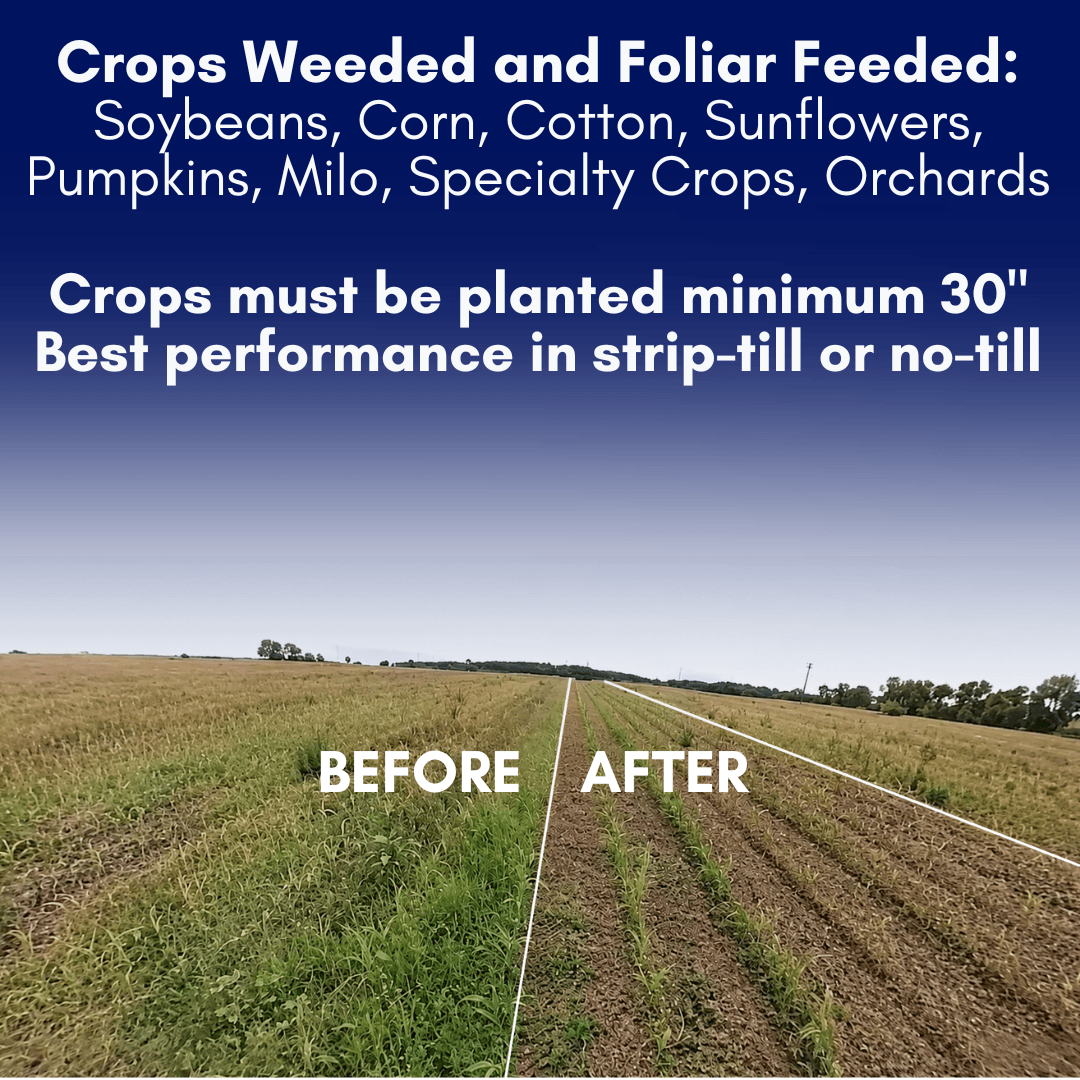
| Crops listed by Greenfield | Soybeans, corn, cotton, sunflowers, pumpkins, milo, specialty crops, and orchardsThe published graphic lists crops weeded and foliar fed. Confirm your crop and operation with the team. |
| Minimum crop-row spacing | 30 inchesPublished guidance; confirm the configuration and field layout for your farm. |
| Preferred field systems | Strip-till or no-tillGreenfield identifies these systems for best performance. Field conditions still matter. |
| Monitoring | Operator software with robot camera views |
Source: Published crop and row-spacing guidance. UVM’s report also describes robots designed for 30-inch crop rows. Ask Greenfield to confirm configuration and suitability for your field.
Where soil health fits
USDA NRCS identifies reduced disturbance, soil cover, biodiversity, and continuous living roots as soil-health principles. Robotic weeding is one management tool, alongside the farm’s wider crop and soil plan.
These principles concern a whole farming system. Choosing a weeding tool does not, by itself, establish a soil-carbon gain, an organic certification, or a yield outcome. Consider how weed control fits with your rotation, residue, cover crops, and local agronomic advice.
Read USDA’s soil-health guidance and EPA’s explanation of integrated pest management. For an illustrated look at a growing season, explore Field Arcade.
Field demonstrations and research
UVM Extension, 2026
In July 2026, UVM Extension reported a BOTONY demonstration mowing weeds between soybean rows and described testing in corn and soybeans. Its team was evaluating suitability for Vermont field conditions.
The university’s field report is an independent account of that demonstration and research program. It does not establish a result for every crop, soil, or farm.
Rodale trial announcement, 2025
Greenfield’s November 4, 2025 announcement says Rodale Institute purchased a robot for 2026 trials. The announcement does not present trial results.
Read the original announcement for its date and scope.
Questions farmers ask
What is BOTONY?
BOTONY is Greenfield Robotics’ autonomous agricultural robot. It controls weeds by mechanically mowing between crop rows. Field maps guide its routes, and operator software supports monitoring.
Which crops does Greenfield list?
Greenfield’s crop guidance lists soybeans, corn, cotton, sunflowers, pumpkins, milo, specialty crops, and orchards for weeding and foliar feeding. Ask the team to confirm suitability for your particular crop, row layout, and field conditions.
What row spacing does BOTONY need?
The published minimum is 30-inch crop-row spacing. Greenfield identifies strip-till and no-till as its best-performing systems. Confirm your field layout and robot configuration before planning a deployment.
How do the robots navigate?
The robots follow mapped field routes. UVM Extension describes using a drone survey to prepare those routes, then launching the robots with their preloaded maps. Greenfield’s operator software provides monitoring and camera views.
How can I check whether BOTONY fits my farm?
Use the farmer inquiry form to discuss your location, crops, row spacing, tillage system, acreage, and weed-management goals. Greenfield can confirm field setup, current availability, and pricing for your operation.
Start with your field
Bring your crop list, row spacing, tillage approach, and questions about the coming season. The next step is a conversation about a workable field plan and current options.