Make room to grow
Greenfield’s robots mow weeds between crop rows. Return visits help manage weeds that regrow. Mechanical mowing can reduce reliance on herbicides; the right weed-control program depends on the crop, the weeds and the field.17

PLAY · LEARN · REGENERATE
Take the wheel of a tiny weeding robot. Follow a whole growing season, cut the weeds, and discover what comes next.
Explore the growing seasonKEYBOARD + TOUCH · NO DOWNLOAD NEEDED
THE GROWING SEASON
Spring rain meets soil protected by plant cover and last season’s residue. Every farm’s calendar depends on its weather and rotation.
Spring rain meets soil protected by plant cover and last season’s residue. Every farm’s calendar depends on its weather and rotation.
A planter places the crop in rows. Planting belongs to the farmer’s equipment; the little robots have a different job ahead.
With suitable moisture and warmth, seedlings emerge along the rows. This little scene speeds up a process that takes real growing time.
Crops are not the only plants growing. Weeds can compete for light, water, and nutrients, including in the spaces between rows.
Robots cut weeds between crop rows, leaving the crop standing. Watch for short stumps, new growth, and another pass through the same spaces.
Milo: Milo is grain sorghum. Its seed heads fill with grain as the crop matures. Variety, weather, and management all shape the season.
Soybeans: Soybeans form pods around their stems as the crop matures. Variety, weather, and management all shape the season.
Milo: A combine gathers mature sorghum grain. Short stalks and other crop residue remain behind in this illustrated field.
Soybeans: A combine gathers the mature soybeans. Short stems and other crop residue remain behind in this illustrated field.
The farmer’s seeding equipment plants a cover crop where it fits the rotation. Plant cover and living roots help keep the soil company.
This optional sheep visit follows farmer checks of forage, weather, and fresh regrowth. Dry-looking milo stalks alone do not establish grazing suitability.
This soybean branch keeps the gate closed. The farmer’s rotation, cover, livestock, and field conditions guide whether grazing has a place.
Plants and residue keep this illustrated field covered into winter. A new rotation and a new growing season will bring another chapter.
One illustrated season. Timing, planting, cover crops, harvest, and grazing choices vary by farm.
CARTRIDGE / 04 · THE FARM POLICY TRAIL
Run, jump and harvest through six increasingly ridiculous regions. Manage supplies, make roadside decisions, appoint a sheep CFO, and defeat a Farm Bill with arms.
HIT THE TRAIL KEYBOARD + TOUCH · SIDE-SCROLLING ADVENTURE · FICTIONAL SATIRETHE FIELD IS YOUR PLAYGROUND
Four games. Pick a robot adventure, or grow something suspicious in Grow a Lobbyist.
Clear every weed without mowing the crops. Steer with arrow keys or WASD; the bot keeps rolling. Space pauses.
YOUR BOT. YOUR WAY.Arrow keys / WASD when the field is focused.
Or press and hold these buttons.
Ready when you are. No timer on this field.
Play freely. To keep personal bests and badges between visits, enable “Remember arcade scores” in Cookie settings.
SAME FIELD. DIFFERENT TOOLS.
Watch the work between the rows. The crop and weather stay the same on both sides.
Mechanical cutting between rows
A sprayer applies a treatment
Cut, then return. A robot cuts weeds between rows. Further passes can manage regrowth and new weeds.
Apply a treatment. Herbicide choice, timing, application, and field conditions affect weed control.
MILO ON BOTH SIDES
Farms may combine methods. Robots cut between rows; in-row weeds can require additional management. Crop identity, weed-control choices, and measured food residues are separate questions.
FOLLOW THE HARVEST
Milo is grain sorghum. Food-grade sorghum can pop, too—with smaller popped pieces than popcorn.
FROM GRAIN TO A LITTLE BOWL OF JOY
Popping depends on crop variety and grain preparation. Explore the growing notes and sources below.
Follow one imagined growing season, then explore the real farm ideas behind the animation.
Greenfield’s robots mow weeds between crop rows. Return visits help manage weeds that regrow. Mechanical mowing can reduce reliance on herbicides; the right weed-control program depends on the crop, the weeds and the field.17
After harvest, crop residue and cover crops help keep soil covered. Living roots feed soil organisms. USDA’s soil-health principles bring these ideas together: less disturbance, more cover, more diversity and living roots for more of the year.2
Our sheep visit mature milo residue after harvest, once the farmer has checked the grazing plan. Forage testing, crop maturity, weather and fresh regrowth guide that decision, with local advice tailored to the flock.34
Milo is grain sorghum. Food-grade sorghum can pop into little crunchy bites; popcorn comes from a particular type of corn. Both begin as grain grown in a field, with variety and grain preparation helping shape the final pop.56
The side-by-side field shows two weed-control approaches. Real farms may combine methods.7 A crop’s name tells you which plant it is; farm records and testing tell you about pesticide use and residues. EPA sets food-residue limits, and a detected residue does not automatically mean unsafe food.8 Seasons and farming choices vary by place.
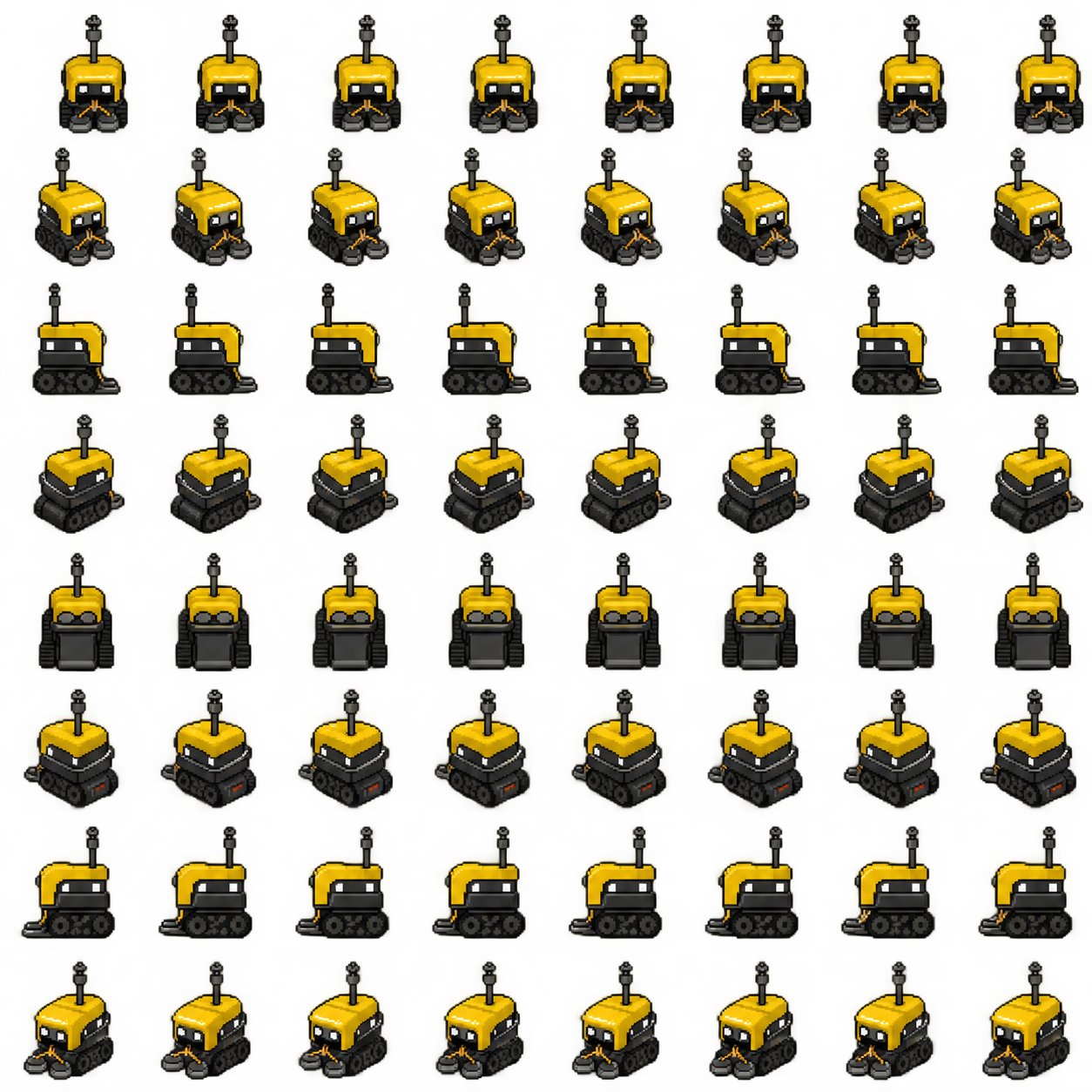
YOUR BOT, IN PIXELS
The yellow hood, black wheels, camera mast, and low cutter are all here. The sprite collection has eight directions and eight animation frames per direction. There’s a tiny 8 × 8 pixel version, too.
 Open the sprite collection8 directions × 8 frames
FROM PIXELS TO REAL FIELDS
Explore the BOTONY robot and how Greenfield works with farmers.